Skip to Main Content

Town of Ajax

Fire services is dedicated to fire prevention, emergency response, and public safety. Learn about fire protection services, safety programs, and inspections.

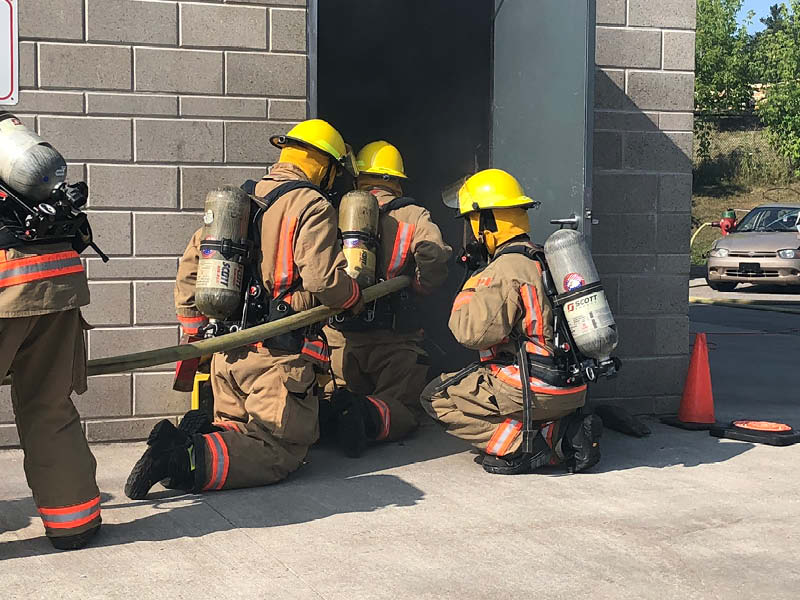
Three firefighters in gear kneel at an open door with a hose, preparing to enter a smoky building.

Protecting Your Home and Community

It is your responsibility to keep your home and family safe from fire.

  • Prevent fires before they start
  • Maintain working smoke alarms on every floor of your home and outside every sleeping area
  • Plan and practice a home escape plan
  • Consider installing residential sprinklers when building a new home or doing major renovations

Fire Safety for Your Home and Business

  • In the event of an emergency, working smoke and carbon monoxide alarms can save your life
  • Every home in Ontario is required to have a working smoke alarm on every storey, as well as outside of all sleeping areas, it is the law
  • Test your smoke alarms every month using the test button
  • Replace smoke alarm batteries at least once a year and whenever the low battery warning chirps
  • You must replace ALL smoke alarms every 10 years with the same type of alarm. For example, a hardwired electric alarm must be replaced with a new hardwired electric alarm and an alarm with a visual indicator (strobe) must be replaced with a new alarm that has a visual indicator
  • Carbon monoxide alarms are required to be installed close to all sleeping areas in dwellings with a fuel-burning appliance, fireplace or attached storage garage
  • Carbon Monoxide alarms are required on every storey (floor) of your home, including storeys that do not have sleeping areas (As of January 1, 2026)
  • In multi-unit residential buildings, CO alarm requirements apply to individual units based on the presence of fuel-burning appliances or attached garages and may also apply to public corridors served by fuel-fired equipment.(As of January 1st, 2026)
  • Smoke and carbon monoxide alarms don’t last forever, replace them as required by the manufacturer’s instructions
  • Keep your cooking space clean and free of anything that can burn
  • Don’t store anything on the back of your stove
  • Reaching over hot burners and pots can cause burns
  • Roll up your sleeves or wear a short sleeved shirt
  • Keep pot lids close to the stove while you cook
  • If there is a small fire you can slide lids onto pots and turn off burners to put it out
  • A fire extinguisher can help control many types of fires while you are waiting for the fire department to arrive
  • Always read the instructions that come with the fire extinguisher
  • Keep a fire extinguisher in your kitchen, not too close to the stove, and consider having one in the garage, workshop, basement, camper trailer, vacation home or boat if applicable
  • Check extinguishers monthly to ensure that they are holding the charge
  • If you are required to use a fire extinguisher, remember the acronym “P.A.S.S.”. Pull the needle, aim the hose, squeeze the nozzle and sweep from side to side at the base of the fire
  • Have extinguishers serviced annually by a qualified contractor
  • Draw a floor plan of your home
  • Mark all windows and doors
  • Plan two ways out of every room, the primary escape should be the door and the secondary should be the window
  • Make sure all windows and doors can be opened easily
  • In a two-storey building, plan your escape through a window onto a roof or porch
  • If you must use an escape ladder, be sure everyone knows how to use it. Children should practice with an adult
  • Choose a meeting place for family members outside and mark it on the floor plan, a good meeting place would be a tree, a telephone pole or a neighbours house
  • Make sure everyone understands the planned escape routes
  • Practice your escape plan at least twice a year with everybody in your home
  • Remember to practice with visitors and guests too
  • Keep anything that can burn at least one metre away from furnaces, baseboard heaters, woodstoves and fireplaces
  • Make sure you have working carbon monoxide alarms outside sleeping areas in your home;
  • Get regular maintenance on your heating equipment from a qualified professional
  • Turn off portable heaters every time you leave the room and when you go to bed
  • Put ashes into a metal bucket far from combustible materials to cool down, it can take three days for ashes to cool completely
  • Maintain chimneys to ensure there are no blockages
  • Always stay in the room when candles are burning, put out the flame every time you leave the room or go to bed
  • In a power outage use battery powered lanterns or battery powered candles to reduce the risk of fire
  • Keep candles away from anything that can burn such as furniture or curtains
  • Keep candles, matches and lighters away from pets and children
  • Keep candles in sturdy candleholders that won’t tip or burn
  • Keep fire hydrants visible and accessible
  • Keep grass and vegetation away from fire hydrants
  • In winter make sure there is one metre of clear space around fire hydrants and clear paths to reach fire hydrants
  • Residents should refrain from setting off fireworks or attending informal neighbourhood displays. Follow the Town fireworks by-law and all manufacturer’s instructions if you do decide to discharge fireworks.
  • Keep your barbeque clean and inspect hoses and burners, make any needed repairs and have it inspected by a licensed gas professional.
  • Open air wood burning appliances (i.e., chimeneas, bonfires etc.) are NOT permitted.
  • Gas appliances (i.e., propane fire tables) are permitted.
  • Always follow the manufacturers’ instructions when using all fuel burning appliances.
  • Keep outdoor fuel burning appliances away from combustibles such as buildings, decks, patio furnishings (umbrellas and awnings), fences and vegetation.

Fire Safety in Your Apartment Building

If there is a fire in your unit

  • Tell everyone in the unit to leave, close all doors behind you
  • Pull the fire alarm on your floor and yell “fire”
  • Leave the building using the nearest stairway
  • Call 9-1-1 when it is safe to do so
  • Meet the firefighters and tell them where the fire is

If you decide to leave the building when you hear the fire alarm

  • Feel the door of your unit before opening it. If it is hot, use another way out. If it is cool, leave the building immediately using the closest stairway
  • Close all doors behind you
  • Do not use the elevator
  • If you encounter smoke in the stairway, use another stairway, if this is not an option, return to your unit or seek shelter in another unit
  • If an announcement is made throughout the building, listen carefully and follow the directions;
  • Call 9-1-1 and let them know where you are

If you can’t get out of your unit

  • Stay in your apartment until you are rescued or until you are told to leave. This may take a long time
  • Do not try to leave your apartment a long time after the alarm has sounded. The longer you wait, the more risk there is that heavy smoke will have spread into stairways and corridors
  • Keep smoke from entering your apartment. Use duct tape to seal cracks around the door and place wet towels at the bottom. Seal vents or air ducts the same way

If smoke enters your apartment

  • Call 9-1-1 and tell them where you are and then move to the balcony. Close the doors behind you
  • If you don’t have a balcony, go to the most smoke-free room, close the door and seal it with tape and towels. If necessary, open the window for fresh air. Show emergency personnel where you are by hanging a sheet from the window or balcony
  • Keep low to the floor where the air is cleaner
  • Listen for instructions from authorities

Flammable Liquids and Gases

Gasoline safety tips

Vapour from gasoline can catch on fire or explode very easily.

  • Store in small quantities (less than one gallon) in containers that have been approved by the Canadian Standard Association (CSA) or Underwriters’ Laboratories of Canada (ULC)
  • Don’t store gasoline in your home
  • Never carry gasoline in the trunk of your vehicle
  • Always fill lawnmowers, snow blowers, etc. in a well-ventilated area outside of your building and move away from where you filled up when you start the motor
  • Avoid spills, if you do spill gasoline wipe it up right away
  • Do not smoke when you use gasoline or other flammable liquids, and never use gasoline for cleaning purposes
  • Do not store gasoline where children will have easy access to it, if a child swallows gasoline call a Poison Centre or a doctor right away

Propane Safety Tips

  • A smell is added to propane so that you can smell it if there is a leak, it smells like rotten eggs or boiling cabbage
  • Store your propane tanks outside in a well-ventilated and secure location
  • Keep your head away from the valves on propane tanks because a sudden burst of propane liquid from the safety valve could result in serious injury or frostbite
  • Keep your tank painted a white, aluminum or another reflective colour to reflect sunlight which can cause the tank to heat up and increase in pressure
  • Ask propane suppliers to check for dents, damage, rust or leaks before refilling a tank
  • Check the date stamp on the collar of the tank to see when it was last approved, propane tanks must be inspected and re-qualified or replaced every 10 years in Canada

Public Education Programs

There are many public education programs available for students, residents, organizations and groups in the Town. You can request a presentation that will meet the needs of your audience.

Fires are happening in your community!

What you need to know about fires in Ajax:

  1. Millions of dollars of damage are caused by structure fires annually;
  2. The number one cause of fires and fire-related injuries is careless cooking;
  3. Fire-related deaths consistently occur in homes.

Protect your family from fire. Take action!

Get Real Ajax is a month-long campaign that occurs every spring and fall. During the campaign, select Ajax households receive an automated telephone message from our Fire Chief with tips about what to do to protect your family from fire. Households will also receive a Get Real Ajax information card in the mail and a door-to-door visit from Ajax firefighters to discuss the realty of fires in the community.

The Fire Service works with mental health partners to help youth and their families reduce the risks that come from playing with fire. Mental health professionals will assess the risk of continued unsafe behaviour and try to find out why your child is setting fires. The Fire Service will teach your family about fire safety. The program is free and available to children from two to 17 years of age.

Every year a local student is awarded the opportunity to be the Ajax Fire Chief for a day. The Fire Chief for a day gets to participate in a variety of exciting activities including:

  • getting suited up in their very own bunker gear
  • going for a ride in a fire truck
  • conducting a fire drill at a local school
  • completing tasks in the Chief’s office
  • attending a meeting at Town Hall
  • receiving a prize pack that is generously donated by McDonald’s and Canadian Tire

Students are invited to participate in the contest to be the Fire Chief for a day in the fall and they will hear about it through their local school.

Teaching our children about fire safety is one of the most important things we do and the Learn Not to Burn program makes it easy and fun.

Each year, our firefighters and fire prevention inspectors visit with children in kindergarten through grade 3 at all public and separate elementary schools in Ajax to discuss fire safety in an age appropriate format.

Children are taught to respond effectively when confronted with fire, how to prevent fires from occurring and to know that firefighters are always available to help them.

We will come to your location and teach your business, group, club or organization about the different classes of fire and how to control them. There is a fee for this service, and a fire extinguisher training permit will be required.

As part of our commitment to the community, Ajax Fire hosts an annual Family Safety Day where the public can come and see:

  • life-saving equipment
  • auto-extrication demonstrations
  • defibrillation demonstrations
  • station tours
  • tours of the fire safety trailer

Keep an eye on the website and local newspapers for information regarding Family Safety Day activities, typically around the beginning of June.

The hazard house is a great teaching aid for our safety conscious community, and plays an important role in our grade 3 Learn Not to Burn program. Our hazard house presentation is very interactive and allows the audience to transform the house from hazardous to safe while learning all about how to prevent each hazard.

Careless cooking is the leading cause of fires in Ajax. Our hazard kitchen is an interactive tool that is used to deliver home and kitchen fire safety messages to teenagers, adults and seniors in the community. Through the use of our hazard kitchen, we can educate and change behaviours in order to reduce the number of fires in our community.

Whenever possible, a fire truck staffed with a crew of firefighters may be scheduled to attend special community events such as parades, fun fairs, etc. Our firefighters are excellent information resources and they are always willing to share their knowledge of fire safety, provide handouts and demonstrate the tools and equipment that they use.

We can also arrange for a visit from Sparky the Fire Dog, our costumed character mascot.

If your group is having a special event fill out a public education request and we will try to accommodate.

Our crews are happy to provide station tours at any of our three fire stations. On a station tour you will be able to:

  • meet our firefighters
  • learn about home safety
  • get a close-up look at our equipment and trucks
  • find out how we keep the community safe

You can book a fire station tour online or drop in anytime and we will try to accommodate.

The fire safety house is a trailer that is set up just like a home. It can be brought to events, schools, etc. or used at our fire stations to teach children about fire safety.

This opportunity provides children with realistic fire safety training such as:

  • recognizing the sound of a smoke alarm
  • crawling low under smoke
  • learning to “get out and stay out” in the event of a fire

Ajax Fire invites residents to attend Family Safety Day on Saturday, June 6 from 10 a.m. to 3 p.m. at the Ajax Fire Station Headquarters located at 900 Salem Road N. There will be various interactive activities such as a hazard house display, a children’s obstacle course, a hose target game, firefighter training demonstrations, fire safety information handouts, the Electrical Safety Authority, and much more!

Agenda & What to Expect

Interactive exhibits by Emergency Service Personnel that include:

  • Children’s Obstacle Course
  • Hazard House – Hunt for Home hazards
  • 38 mm Water Hose Target Shoot for Kids
  • Rescue demonstrations
  • Fire Safety Information Handouts
  • Electrical Safety Authority
  • PARA Marine
  • And lots more!

Enter draws to win great prizes!

Additional parking available at 800 Salem Road N. (Operations Centre)

All activities are FREE except for the food.

We will be accepting non-perishable food items for the food bank.

12 Days of Fire Safety Reminders

Day 1: Holiday Lights: Inspect for cracked or damaged cords, broken plugs or loose connections and replace before installing.

Day 2: Water fresh-cut Christmas trees daily. Always keep the base of the trunk in water and away from heat sources such as fireplaces, heaters, or candles.

Day 3: Candles: Blow candles out when you leave the room. Battery powered candles are a great alternative.

Day 4: Smoke Alarms: An alarm on every level of your home, tested monthly and batteries replaced annually is probably the best gift you can give your family this holiday season.

Day 5: Carbon Monoxide alarms (CO): CO is poisonous. You can’t see, smell or taste CO. Protect your family from CO poisoning by installing working CO Alarms on every level of your home and near all sleeping areas.

Day 6: Extension Cords: Extension cords are for temporary use only. Avoid overloading a circuit and never cover extension cords with a rug or furniture.

Day 7: Kids in the Kitchen- Holiday safety starts with safe families in the kitchen. Little hands (or paws!) and holiday heat don’t belong together – keep kids safe while you cook.

Day 8: Home Escape Plans: Give your family the gift of peace of mind with a home escape plan that shows two ways out of every room and has a meeting place outside your front yard like a tree or a sidewalk.

Day 9: Cooking: Unattended cooking is the leading cause of fires in Ajax. Stay in the kitchen if you are frying, boiling, grilling, or broiling food.

Day 10: Heating Sources: Keep heat sources 1 metre away from combustibles like furniture, decorations, and paper.

Day 11: Smoking: If you smoke, smoke outside and use deep sturdy ashtrays. Never flick your butts!

Day 12: Lithium-ion batteries: Always monitor the device when it’s charging, use the appropriate charger and do not exceed the recommended charging time.

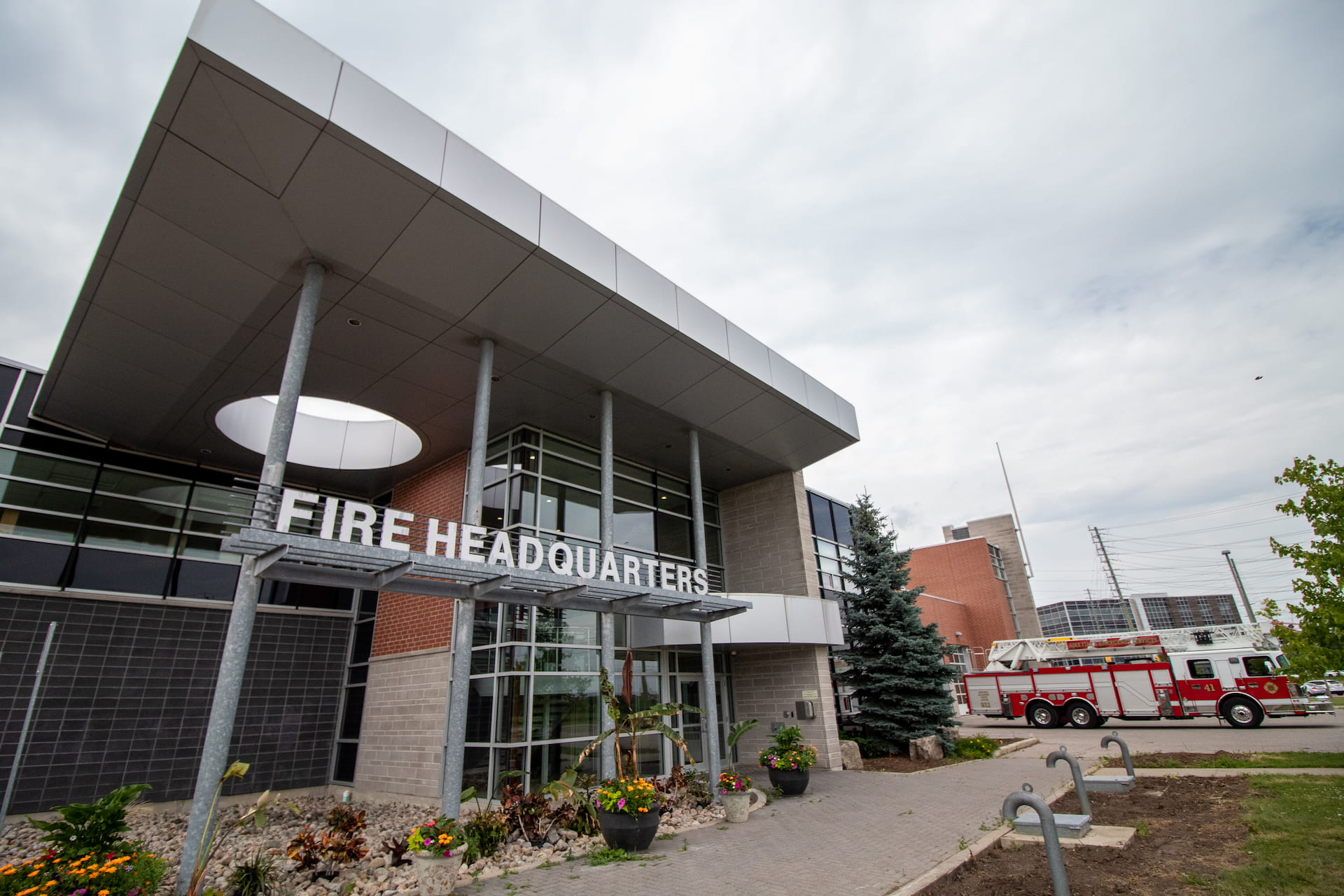
Exterior view of a modern fire headquarters building with a fire engine parked outside.

Request a Fire Safety Presentation and Forms

We offer many services including fire station tours, fire truck visits and other educational programs.

Note: Although we make every attempt to accommodate requests, the submission of these forms does not guarantee a booking. You will be contacted by our staff to confirm your request and review the information that you have provided.

Please be advised that Station Tours and Truck Attends are conducted by on-duty fire crews. Should an emergency arise, the crew may be required to leave immediately, ending the tour or their attendance at the event.

Town of Ajax Fire Department

Ajax Fire and Emergency Services is made up of five distinct divisions:

  • Administration
  • Emergency Planning
  • Fire Prevention
  • Fire Suppression
  • Training

On-duty Fire Suppression crews work rotating shifts in order to provide 24 hour on-duty coverage.

The remaining divisions work Monday through Friday during normal business hours, in addition to after-hours on-call responsibilities.

At present, the ever-increasing responsibility for Emergency Planning is performed by the Fire Chief with assistance from various staff.

Fire Chief Aaron Burridge

Fire Chief Burridge is responsible for Ajax Fire and Emergency Services, working closely with the Deputy Chiefs.

Fire Chief Burridge started as a volunteer firefighter with Ajax in May 2000 and was hired as a full-time firefighter in January 2001. He progressed through the ranks to a qualified Captain, Training Officer, Chief Training Officer, Deputy Fire Chief in October 2016, Interim Fire Chief in December 2022 and was named the Fire Chief in June 2023. Fire Chief Burridge serves as a member of the OAFC Health and Safety Committee and is an OAFC representative on the Ministry of Labour Section 21 Committee.

Fire Chief Burridge is a graduate of the Ontario Fire College and Toronto Metropolitan University and has throughout the course of his career acquired significant education from a variety of post-secondary school institutions in the following fields of study: Fire Emergency Service and Rescue, Fire Protection Systems, Fire Protection Technology, Collective Bargaining, Public Administration, Occupational Health and Safety and Labour Relations.

Deputy Fire Chief Shain Kimbell

Deputy Chief Shain Kimbell is responsible for leading the Fire Prevention Division and Administration Team of the Ajax Fire and Emergency Services. Working alongside the Chief Fire Prevention Officer, he also works closely with the Fire Chief in an administrative role and may assume the duties of the Fire Chief in his absence.

During his time with Ajax Fire and Emergency Services, Deputy Chief Kimbell has held positions including Fire Fighter, Acting Captain, Captain, Acting Platoon Chief before accepting the position of Deputy Fire Chief in 2022.

Deputy Fire Chief Chris Porter

Deputy Chief Chris Porter has been a member of the Ajax Fire and Emergency Services department since 2014. During this time, he has been an active member of the department and has been involved in multiple committees specializing in technical rescue. In 2021, Deputy Chief Porter was promoted into the training division and held the rank of Training Officer along with Qualified Captain. He has been and continues to be an integral part of the departments success and was awarded in 2024 the “Fire Service Excellence Award” given to a member who shows continued exceptional efforts and commitment to the fire service.

Prior to joining the Town of Ajax, Deputy Chief Porter’s career path in firefighting began with the Burlington Fire Department in 2009. He has been working diligently on expanding an educational portfolio which includes completion of the Ontario Fire College Officer program along with the Humber College Executive Management program. Deputy Chief Porter was promoted to Deputy Chief in January 2025 and is now responsible for leading the Fire Suppression and Training Divisions of the Ajax Fire and Emergency Services.

Firefighter Recruitment and Training

Becoming a firefighter is one of the most challenging, fast-paced and rewarding professions available. The Town of Ajax takes pride in the recruitment and ongoing training of all of our current and future firefighters.

The minimum qualifications to be considered for a career as a Town of Ajax Firefighter include:

  1. Must have completed as a minimum grade 12 or equivalent;
  2. Successful completion of NFPA 1001 Standard for Firefighter Professional Qualifications Levels 1 and 2 (IFSAC and or Pro Board certified) or;
  3. Valid, current and successful completion of the Ontario Fire Administration Inc. Candidate Testing Service – Stages 1 to 3 including the Swim Test;
  4. Up-to-date certification in both Standard First Aid/CPR and BLS;
  5. Current and unrestricted Class DZ Ontario driver’s license – minimum– (you will be required to provide proof of your valid DZ license;
  6. Ability to speak, read and write English fluently and communicate clearly and precisely under demanding conditions;
  7. Ability to handle periods of intense and sustained physical, mental and emotional stress;
  8. Ability to work well as part of a team and have strong interpersonal and customer service skills;
  9. Must be able and required to work 24 hour shifts, including weekends and holidays;
  10. Ability to provide a current vulnerable sector check;
  11. Legally entitled to work in Canada.

Below are some additional qualifications that are considered an asset:

  • Completion of the emergency medical responder (EMR) program;
  • Demonstrated work experience as an active firefighter with a municipal, military, federal and/or industrial fire service;
  • Demonstrated computer skills;
  • Fluency in a second language or sign language.

All of our firefighters must successfully complete an in-depth training program before being assigned to a platoon. Once assigned, every firefighter is expected to continue meeting training requirements for the duration of their career.

Our firefighter training includes (but is not limited to) the following topics;

  • full Emergency Medical Responder program
  • Self-Contained Breathing Apparatus fit testing and training
  • driver training
  • aerial operations
  • pumper operations
  • ice/water rescue
  • auto extrication
  • gas detection and air monitoring
  • extensive practical and fireground training
  • hazardous materials awareness
  • radio communications

Every year we invite two local students to participate in our co-op program. This program allows students to shadow our firefighters and fire prevention inspectors and earn credit for doing so.

Our co-op program is very popular, typically we interview students towards the end of grade 11 to set up placements for the following year. If you are interested in doing co-op with us, talk to your high school guidance counsellor.